Reading Tarot Reversals: Tradition, Choice, and Personal Style
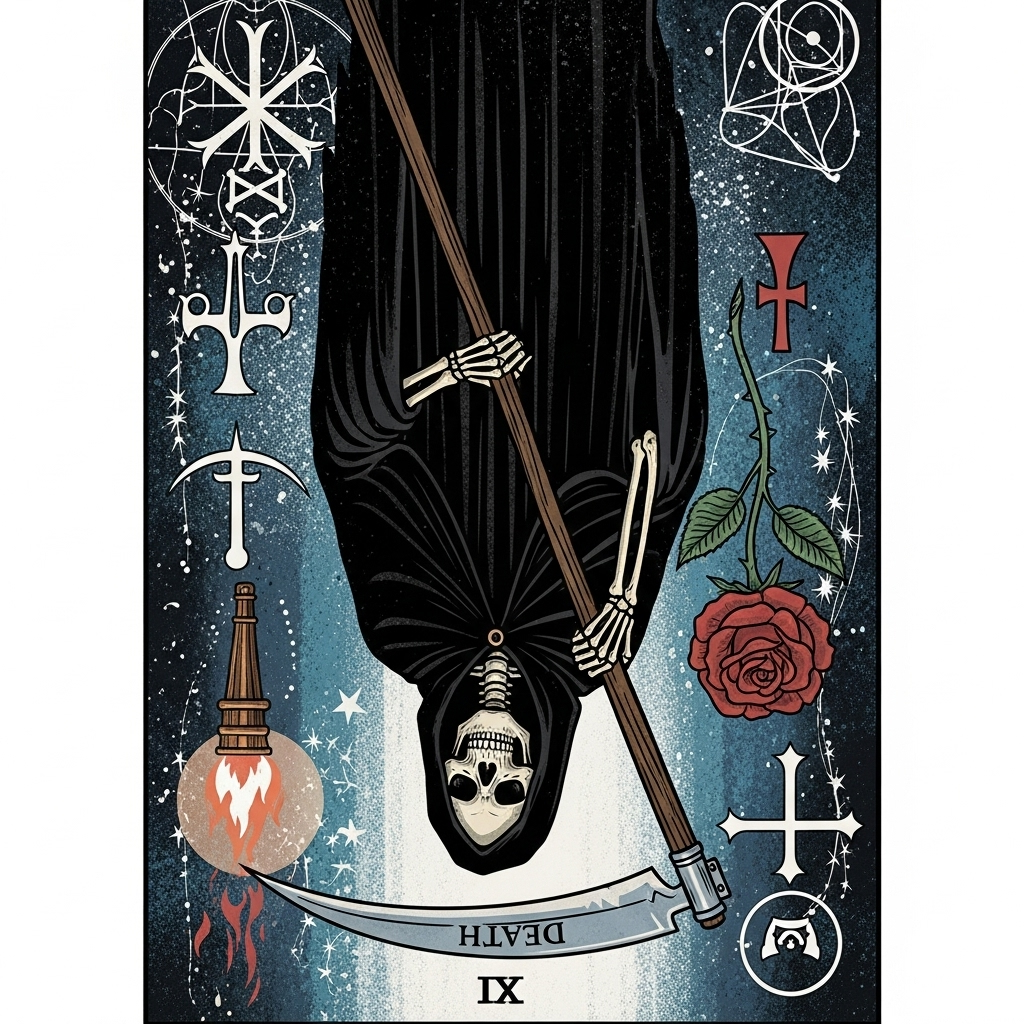
One of the most common questions people ask when learning tarot — or booking a reading — is whether reversals are used.
Should tarot cards be read upside down?
Do reversed cards change the meaning?
And is one method more “correct” than another?
The truth is simple: reading tarot reversals is entirely up to the individual reader. Tarot is not a rigid system with a single approved method. It is a symbolic language, and like any language, fluency develops through personal relationship and practice.
What Are Tarot Reversals?
A tarot reversal occurs when a card appears upside down in a spread. Many readers interpret reversals as:
Blocked or delayed energy
Internalized versions of a card’s meaning
The shadow or challenge of a theme
An opposite or diminished expression
For some readers, reversals add nuance and psychological depth. For others, they can feel distracting or unnecessary. Neither approach is wrong.
Tarot Is a Complete System — Even Upright
The tarot deck contains 78 cards, each layered with symbolism, contrast, and complexity. When read upright, these cards already form a complete spiritual system — one that includes light and shadow, creation and destruction, expansion and limitation.
Every upright card contains a spectrum of expression. The difference between confidence and arrogance, love and attachment, discipline and rigidity is already present in the imagery and context of the spread. Meaning shifts naturally depending on the question asked, the surrounding cards, and the reader’s intuition.
Because of this, some tarot readers — myself included — do not feel that reversals are required to access deeper meaning.
Aesthetic, Flow, and Symbolic Clarity
Another reason many readers prefer upright cards is aesthetic coherence. Tarot imagery is intentionally designed to be viewed upright. The posture of the figures, the direction of movement, the placement of symbols — all of it contributes to how the message unfolds.
When cards are reversed, the visual language changes. For some readers, this enhances interpretation. For others, it disrupts the flow of the reading.
I personally prefer the beauty and clarity of tarot when the cards are positioned upright. The story feels cleaner. The symbolism speaks more directly. The message unfolds with less mental friction and more intuitive resonance.
Flexibility Over Rules
While I usually do not read reversals, I don’t view tarot as dogmatic. There are moments — specific questions, energetic circumstances, or intuitive prompts — where reversals may be acknowledged or incorporated in a different way.
Tarot works best when the reader listens to the reading itself, not to rigid rules. The cards respond to presence, intention, and awareness — not technique alone.
What Matters Most in a Tarot Reading
Whether a reader uses reversals or not, what truly matters is:
Clarity of interpretation
Integrity of intention
Sensitivity to the querent’s situation
The reader’s ability to synthesize meaning
A skilled tarot reader doesn’t rely on mechanics alone. They read patterns, relationships, symbolism, and energy — all of which exist regardless of card orientation.